Can you play pickleball with a torn meniscus?
5 min Read
A torn meniscus is a common knee injury that can significantly impact movement, stability, and confidence on the pickleball court. Whether someone can safely continue playing depends less on the label of the tear and more on symptoms like swelling, locking, and instability.
Stable tears with minimal swelling and good load tolerance often respond well to structured strength and movement training, while unstable tears that cause giving way may require surgical intervention. Building strength, improving footwork, and restoring confidence are key components of returning to play, which is why working with a Certified Athletic Trainer or Movement Specialist can make the process far more effective and specific to the demands of pickleball.
The real issue is not simply modifying movements, but restoring the body’s capacity to handle lunging, cutting, and twisting again. When the knee is properly supported and prepared, a return to confident play becomes far more realistic.

So just like you, I was curious what Google’s answer was to this question.
Google’s answer, Yes.
But as I kept reading, I came across this recommendation:
“Adjust your game. Avoid deep, aggressive lunges and sharp twisting motions, which commonly trigger pain.”
And this is where Google and I disagree….A LOT
Before we get into why, let’s talk through this properly.
So….Can you play pickleball with a torn meniscus?
Honest answer, it depends!
It depends on a lot of different things:
How stable is the tear?
How long ago did you tear it?
How much swelling is there?
How much are you currently limited by the injury?
What Is a Meniscus Tear?
Quick anatomy lesson. You have three types of cartilage in your body.
The type that is on the ends of the bones to prevent friction and allow them to glide over each other.
The flexible type that is your outer ear.
The spongy fibrous kind that sits between the bones in your knee and between your vertebrae in your spine that act a bit more of shock absorbers and shear forces
So the type we are discussing is this third type.
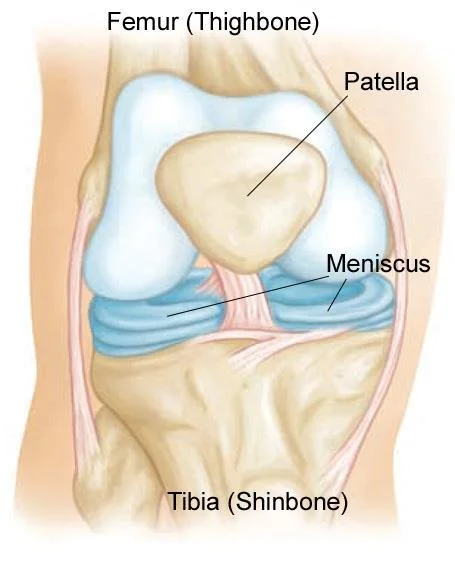
Now there are several different types of meniscus tears, some are more complex than others. Some have the potential to heal on their own. Some are stable, some are NOT.
These are all things that need to be taken into consideration when deciding whether it is safe to play on or not.
You may have been told you have a “complex tear” or even a “bucket-handle tear.”
But the type of tear on imaging doesn’t automatically determine whether you can play.
What is more important is how your knee is responding.
What Actually Matters When Deciding If You Can Play
Tears That Often Do Fine With Movement:
Minimal swelling
No locking
Load-tolerant
You feel confident moving on it!
Tears That Need More Caution
Mechanical locking
Catching
Large swelling response
Giving way, Huge 🚩
Once we have determined what we are dealing with it is much easier to answer the question….and move forward with a treatment plan.
Real-World Pickleball Examples
I have worked with several people who have meniscus tears, didn’t want to have surgery and returned to playing pickleball very effectively! We did a lot of strength work to make sure the support around the knee and hip was the best it could be to withstand the loads of playing. We also did a lot of work on footwork, cutting and deceleration to make sure that her knee could handle all the different types of movements that pickleball requires and restore confidence that they could handle the movements as well.
Sometimes the brain is a bigger barrier than the injury! If you haven’t read my blog about the Hierarchy of Protection read that now.
With meniscus injuries especially, the body can shift into a protective pattern. The knee may feel unstable, so everything around it tightens,the quads, hamstrings, even the hip in an effort to create safety and stability
That protection is helpful early on. But if it lingers too long, it can limit movement, reduce confidence, and make the knee feel worse than it structurally is.
Part of determining what you need isn’t just strengthening, it’s helping the body relax out of protection and move back into progression.
I also worked with several who had meniscus injuries that required surgery because they were unstable meaning their knee would give out with minimal movements, these are the types of injuries that if not addressed can cause further injury and damage inside the knee. So after surgery we did a lot of strengthening of the muscles around the knee and hip to make sure it could withstand the needs of pickleball. As well and footwork, cutting and deceleration to get them back to pickleball activities.
Why I Disagree With “Adjust Your Game”
Now let’s go back to Google’s advice….adjust your game. I disagree with this! It stated to avoid lunging and twisting motions….well then you can’t play pickleball. Those are essential movements of the game! If you can’t lunge, you reach for the ball and you pop it up giving the other team easy shots to put away. If you can’t twist or cut, same, you end up reaching and putting you and your partner at risk in the point. If you can’t do these things, then you can’t play pickleball.
If you truly can’t perform those movements, then the answer isn’t to “adjust your game.”
The answer is to build capacity so your body can handle the game again.
All too often I see people showing up to the courts limping and saying they are fine, but then can barely make it up from the baseline.
Look I get it, playing pickleball is great for so many reasons! It is part social, part exercise, part stress reduction (hopefully) get to be outside (also hopefully) there are so many reasons why we love to play this and not getting those things is hard and can be lonely. But the focus shouldn’t be on limping through games. It should be on doing the work that allows you to play well again.
This is exactly what I help people with.
I don’t just rehab knees, I understand pickleball. I play it.
I know the demands, the movement patterns, and what your body actually needs to return confidently.
If you’re dealing with a meniscus tear and aren’t sure what your next step should be, I can help you figure that out.
Need Help With Knee Pain in the South Bay?
If you’re dealing with a meniscus tear and feeling unsure about whether you should keep playing — or how to safely return to pickleball — you don’t have to figure it out alone.
I work with active adults and pickleball players throughout Redondo Beach, Hermosa Beach, Manhattan Beach, and the surrounding South Bay communities to help them understand what their knee can tolerate right now — and what it needs to build capacity again.
This isn’t a quick screen or a generic rehab sheet.
It’s a comprehensive 90-minute movement assessment where we evaluate:
How your knee responds to load
Strength and support from the hip and foot
Deceleration and rotational control
Swelling patterns and confidence in movement
If you’re looking for personalized orthopedic movement support in the South Bay, you can learn more about my approach here:
Or, if you're ready to get started:
Book Your 90-Minute Movement Assessment