Shoulder pain from pickleball: Where to start
Shoulder pain from pickleball can be influenced by more than the structures of the shoulder itself. Understanding when and where pain occurs provides useful information, but it may not identify where the problem starts.
An inside-out approach considers nervous system tension, nerve mobility, thoracic spine mobility, and scapular control before focusing solely on the painful area. These factors can influence how the shoulder moves during hundreds of repetitive pickleball strokes.
Athlete Rehab uses a thorough assessment to identify what the body may be protecting before rebuilding movement and strength for the court.

4 min Read
Where Does Your Shoulder Hurt When Playing Pickleball?
First, a few question for you….when does your shoulder hurt playing pickleball?
Every swing? Only overheads?
Also, where does it hurt? In the front? In the back? Down the side?
Knowing where and how your shoulder hurts is important information.
Why Your Shoulder May Not Be the Place to Start
Next according to my mentor @movementrev. Anna Hartman “Never Treat the Shoulder First”
What she means by this, is that very often (like almost always) there is a Central Nervous System Tension Pattern or Visceral Pattern at the root of the shoulder pain.
I know, I lost you. If you have read my previous Blog “Hierarchy of Protection” you are probably still with me, a little bit (If not go read it now) But the idea is that our bodies are set up for survival. Brain and spinal cord, most important. Then Heart and Lungs. Then rest of our internal organs. So if the brain detects that something is off with any of those it will create a protection pattern to keep those things safe first….and basically care less about moving around.
How Repetitive Pickleball Swings Can Affect Your Shoulder
Now to give you a more biomechanical explanation that you can relate to, think about this; you play pickleball 4 days a week 3 hours each time so about 8 games. Let’s say average number of points played each game is 40 and you have a minimum of 1 stroke per point. You are creating almost 1300 strokes per week! That’s a lot of repetitive motion. Now, we’ll call those all forehands for this example. So there is shoulder motion, core rotation, hip rotation in every stroke to produce the force to hit the ball. BUT/AND all that force is also moving through your organs like your lungs and liver (the two most closely related to shoulder pain)
So maybe after a while of doing this your brain is like “The lungs and liver need a break from this” And basically gives them a hug to protect them. This is creating tension on the inside. This tension is then translated to tension/restriction in your shoulder that changes your mechanics and after repetitively swinging with this tension creates pain in your shoulder.
Did this make sense?
OK great!
So now you are thinking….so what does all this mean and what do I do?
Where to Start With Pickleball Shoulder Pain
All this means is that you should give your insides a little more attention than we do. My favorite way to do this is using a Coregous Ball doing these 2 breathing exercises.
This is where I’d start. Then I would move on to a couple nerve glides because when the nerves don’t move well neither do we, so let’s make sure they are free to move as they please.
Why Nerve Mobility Matters for Your Shoulder
The nerves that innervate your arm all originate from your neck. There are a lot of structures that they navigate through to get down to your fingers and can get caught along the way. So again nerve glides help keep these moving freely.
Thoracic Spine Mobility and Scapular Control
Now that we have addressed the inside a bit we can then focus on the outside. Two things that are imperative for shoulder health is Thoracic spine mobility and scapular control and they go hand in hand with each other.
For all of my desk bound people, being hunched at your desk 8-12 hours a day, is probably not helping you out much in the world of thoracic mobility. Being able to both flex, extend and rotate within your thoracic spine is essential for everyday movements, and your pickleball swing. It is also important as related to where and how your scapula (shoulder blade) is oriented along the thoracic cavity. This unique set up of the scapula “floating” or sitting on the back of the rib cage, has direct orientation of how your shoulder sits.
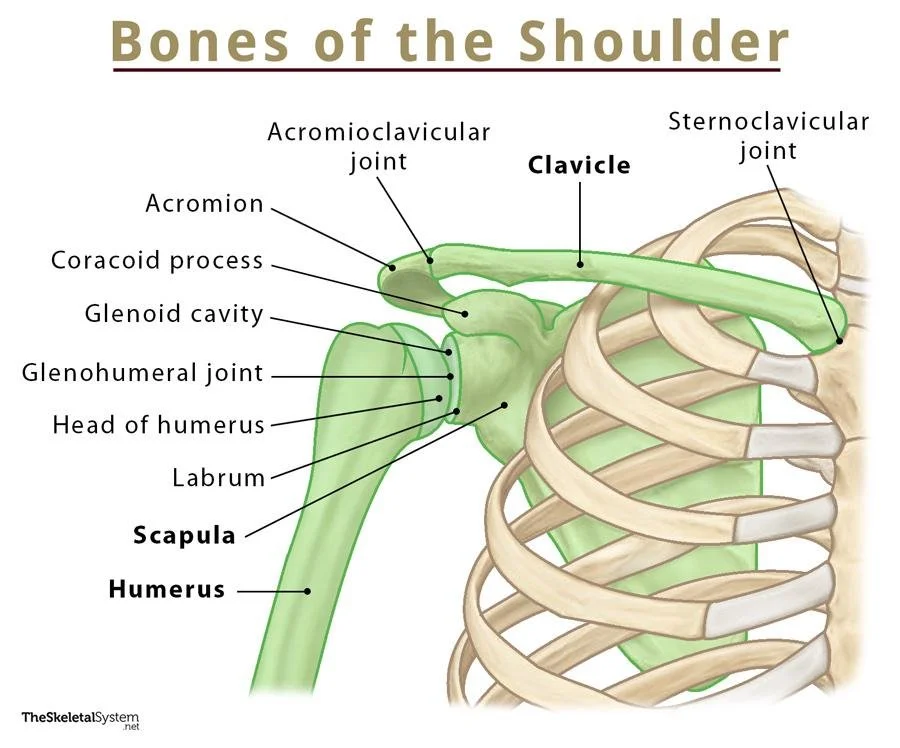
With this, if you do not have neuromuscular control of the scapula you can’t actually control your shoulder movement in space. This can create compensatory movement patterns and put more stress on structures around the shoulder, especially when you repeat that movement hundreds of times every week.
This is my favorite Movement to learn to control Scapular movement
So Where Is Your Shoulder Pain Really Coming From?
Remember those questions I asked you at the very beginning? When does your shoulder hurt? Where does it hurt?
Those answers are important. But they don't necessarily tell us where the problem starts.
Just because your pain is in your shoulder doesn't mean your shoulder is where we should start. And just because a certain swing hurts doesn't mean I'm automatically going to chase the muscles involved in that swing.
Your answers give me information. But then I let your body tell me where to start.
That's the whole idea behind the Hierarchy of Protection and LTAP. Instead of deciding ahead of time what needs to be treated based solely on where you hurt, we assess what your body is protecting and start there.
When to Get Help for Shoulder Pain From Pickleball
If you've tried these things and your shoulder pain continues, or if your pain is significant enough that it's affecting how you play, consider seeing someone who is trained in LTAP or at least understands this inside-out approach we've discussed.
This is what I offer in my Athlete Rehab and Sports Injury Prevention. A thorough assessment that shows me what the body is protecting so we can address that first, and then build back the movement and strength you need to get you back on the court.
What’s Next on Your Reading List