LCL Sprain Treatment: What To Know, Things To Do, Who To See, How To Recover.
An LCL sprain is an injury to the ligament on the outside of the knee that helps provide joint stability. The severity can range from minor fiber damage to a complete tear, which can affect pain, stability, and recovery time.
Treatment typically progresses from managing pain and restoring comfortable weight bearing to rebuilding range of motion, strength, and dynamic movement. Rehab can help determine what the knee currently tolerates and guide that progression based on the demands of the activities you want to return to.
Returning to activity requires more than waiting for the ligament to heal. The knee also needs to regain the strength, confidence, and capacity to handle movements such as stopping, twisting, sprinting, and cutting.

4 min read
What Is an LCL Sprain?
Your LCL is your Lateral Collateral Ligament in your knee. It is a smallish ligament on the outside part of your knee. It connects your femur (thigh bone) to your fibula (smaller bone on the outside of your shin) and it is one of the 4 stabilizing ligaments of your knee.
Isolated LCL injuries are actually less than 2% of all knee ligament injuries and are injured in a combination of other ligament up to 16% of the time (According to a review published in 2024). This is due to the fact that most LCL injuries are contact injuries. A force comes from the inside of the knee pushing outward (think bow leg).
Noncontact injuries can occasionally occur from rotation (think thigh bone move outward on a stationary shin bone) such as can occur in skiing. Or sometimes with a hyperextension type movement.
This is all due to where this ligament is located. Most of our movements of cutting and twisting bring the knee toward the midline of the body, not away from it.
What Does an LCL Sprain Mean?
It is when there are fibers of a ligament torn. This can be minimal fraying to completely torn in half. So healing these is also based on the severity of the injury.
What Are the Symptoms of an LCL Sprain?
Typically with this type of injury there is some direct tenderness around the outside of the knee. And a feeling of “looseness.” Occasionally, particular with full tears there may be some “giving way” of the knee. Again the main purpose of this ligament is joint stability, so this makes sense.
What Should You Do After an LCL Sprain?
If you do suspect a possible LCL tear first thing you want to do is manage swelling and pain. Depending on the severity of the injury such as if there is giving way a brace may be helpful, particularly one that has added support on the outside of the knee. You may also want to use crutches for a short while due to pain with pressure on the leg. And allowing the body to go through the healing process. But if there isn’t any giving way and weight bearing is tolerable I do like using K-Tape to just give a little info to the brain letting it know it is OK.
Who Should You See for an LCL Sprain?
It is recommended you see a health care provider as soon as possible to evaluate your injury. This includes your doctor, an athletic trainer or a physical therapist. (Check out my acute care plan HERE) Once the severity is determined and there is no damage to other structures such as the Peroneal nerve (runs around the fibular head right where the ligament attaches) or the Posterior Lateral Corner of the Knee (also plays a large roll in knee stability) a road to recovery can be planned.
Does an LCL Tear Need Surgery?
Surgery for isolated LCL tears in rare. If there are other things tore such as other ligaments like the ACL or meniscus that need repair, it may be considered to repair the LCL at the same time. Otherwise conservative treatments of rehab is usually prescribed.
How Long Does an LCL Sprain Take to Heal?
Again depending on severity LCL tears can heal anywhere from 3 - 12+ weeks. Very minor sprain can start feeling better rather quickly and then building some strength and confidence and you are good to go back.
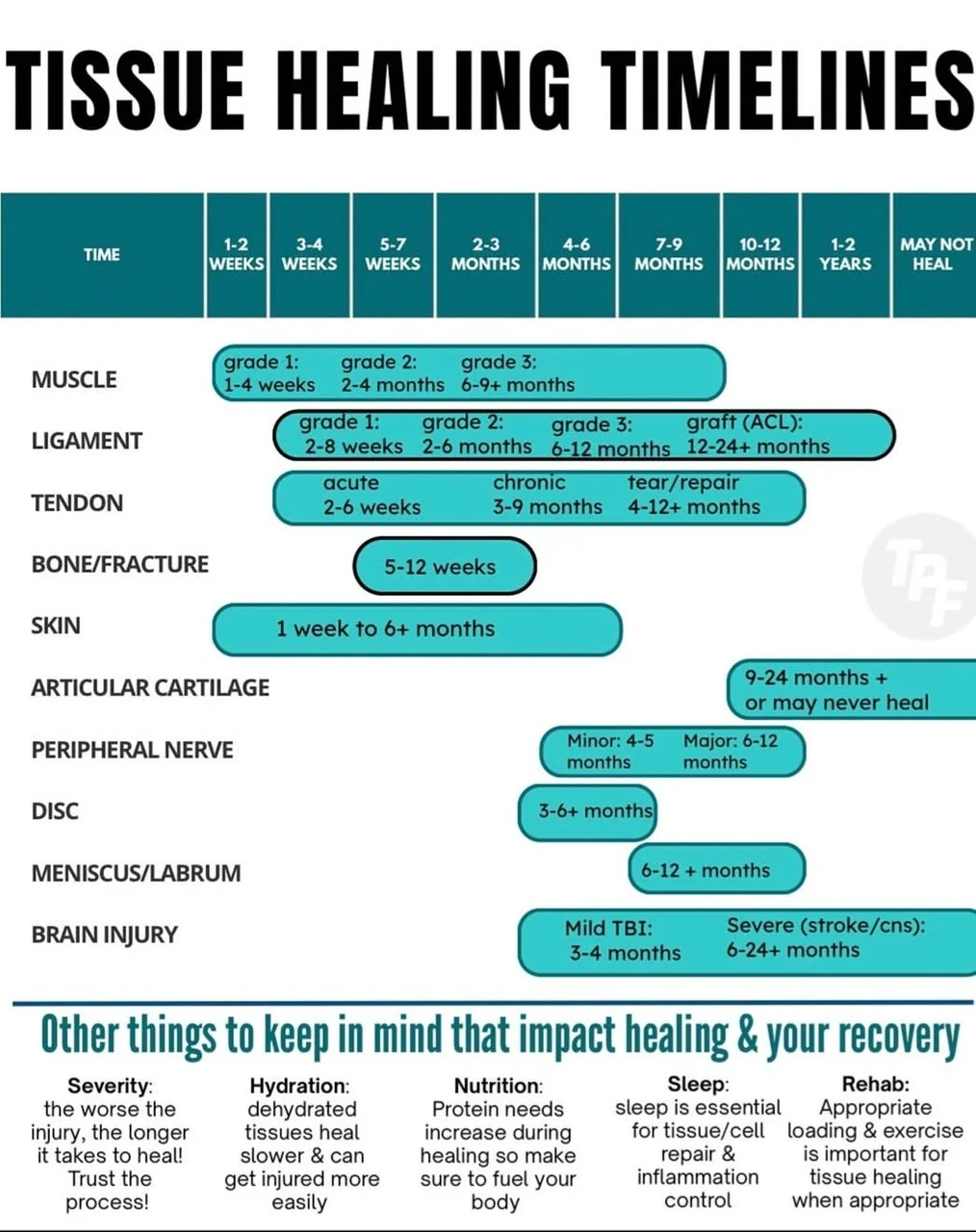
A more significant tear can take longer. The idea around this path is build up the strength of the surrounding muscles on the hip, ankle and knee so the knee doesn’t need to rely on it’s stability only from the LCL.
What Does LCL Sprain Rehab Look Like?
In any of these situations the progression:
Manage/Reduce pain
Pain Free Weight bearing
Regain Range of Motion
Basic Strength Training
Dynamic Movements
What Exercises Help an LCL Sprain?
Exercises such as deadlift, squats (eventually) adductor slides and lunging are all basic strengthening exercises for this injury. Then adding in side to side movements and more dynamic movements such as skater hops and other plyometric type exercises will then get you back into return to play shape.
When Can You Return to Activity After an LCL Sprain?
Again these timelines are general guidelines for how long it takes tissue to physically heal. This doesn’t actually take into consideration returning that tissue to original strength before injury. Nor does it take into account your individual rehab timeline. Just because you are not at 3 weeks after a minor strain doesn’t mean you or your body is ready to return to play. Following the above progression is the key to safe return to activity.
There needs to be a period of time that tests the body’s ability to load the knee and ligament capacity at forces it will encounter during activity, not just being able to lift a particular weight.
If you are trying to return to skiing, pickleball, soccer, basketball or any other sport that requires you to stop short, twist, sprint or cut, your knee needs to practice these movements in a controlled environment first, and then increase the complexity and speeds to test it’s capacity.
As much as I love a slow squat, it won’t be the defining movement or metric to get your knee ready for these types of movements during activities.
Need Help Recovering From an LCL Sprain?
If you injured your knee and aren't sure what you did, or you've already been diagnosed with an LCL sprain but aren't sure what to do next, come see me. We can determine what your knee can currently tolerate, where you are in the healing process, and build a plan to safely get you back to the activities you want to do.
Not sure where to start? Book an Initial Assessment and let's figure it out.