A snowboarder’s fracture is a break in the lateral process of the talus, a small wedge-shaped piece of bone just below your outside ankle bone. It’s so common in snowboarders that it’s actually named after them, but it’s fairly rare in the general population.
It usually happens when you’re riding on your heel edge, hit a bump, and land hard with your ankle forced into dorsiflexion (toes pulled toward your face). The pain and swelling look a lot like an ankle sprain, and even X-rays can miss it, so a CT or MRI is often needed to catch it.
Most of these fractures take 6 to 8 weeks to heal, and getting back to riding can take 3 to 4 months or longer. With Athlete Rehab, I help boarders rebuild mobility, strength and balance so they’re back ready to ride again the following season
5 min read

A snowboarder's fracture is an injury so common in snowboarders that it's actually named after them! But it's fairly rare in the general population.
Why? Because of the position of the ankle and the forces involved to create the injury are relatively unique to the sport.
First, a little anatomy to understand what's actually happening.
What Is a Snowboarder's Fracture?
This is your lateral ankle.
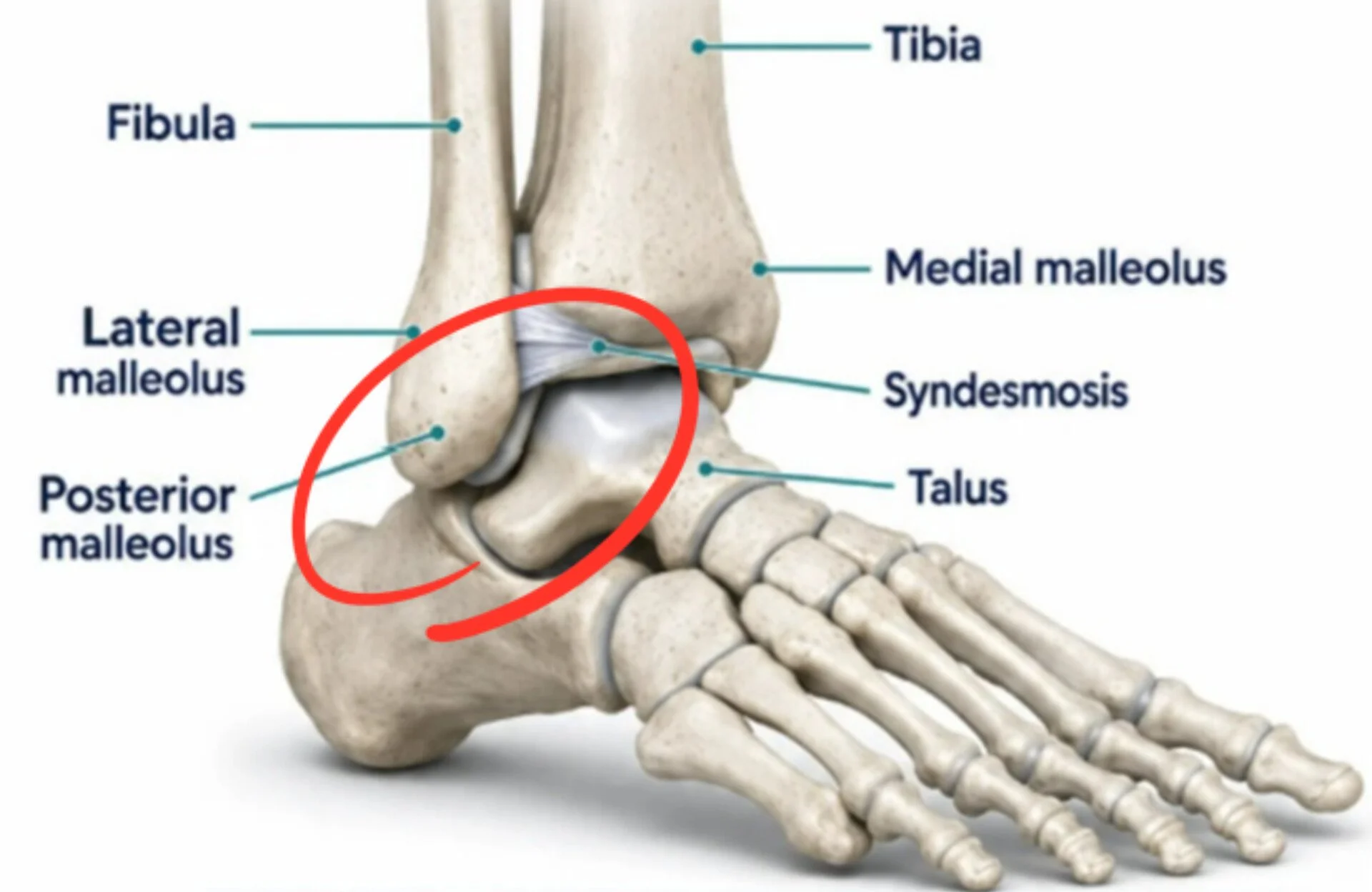
Your tibia (shin bone) and fibula (outside lower leg bone) create a space called the ankle mortise where your talus sits.
Both the tibia and fibula have bony projections that extend down toward your foot. These are the bumps you seel on either side of your ankle, called the medial malleolus and lateral malleolus Just below the lateral malleolus (outside ankle bone) is a part of the talus called the lateral process.
This is a small, wedge-shaped projection on the outside part of the talus.
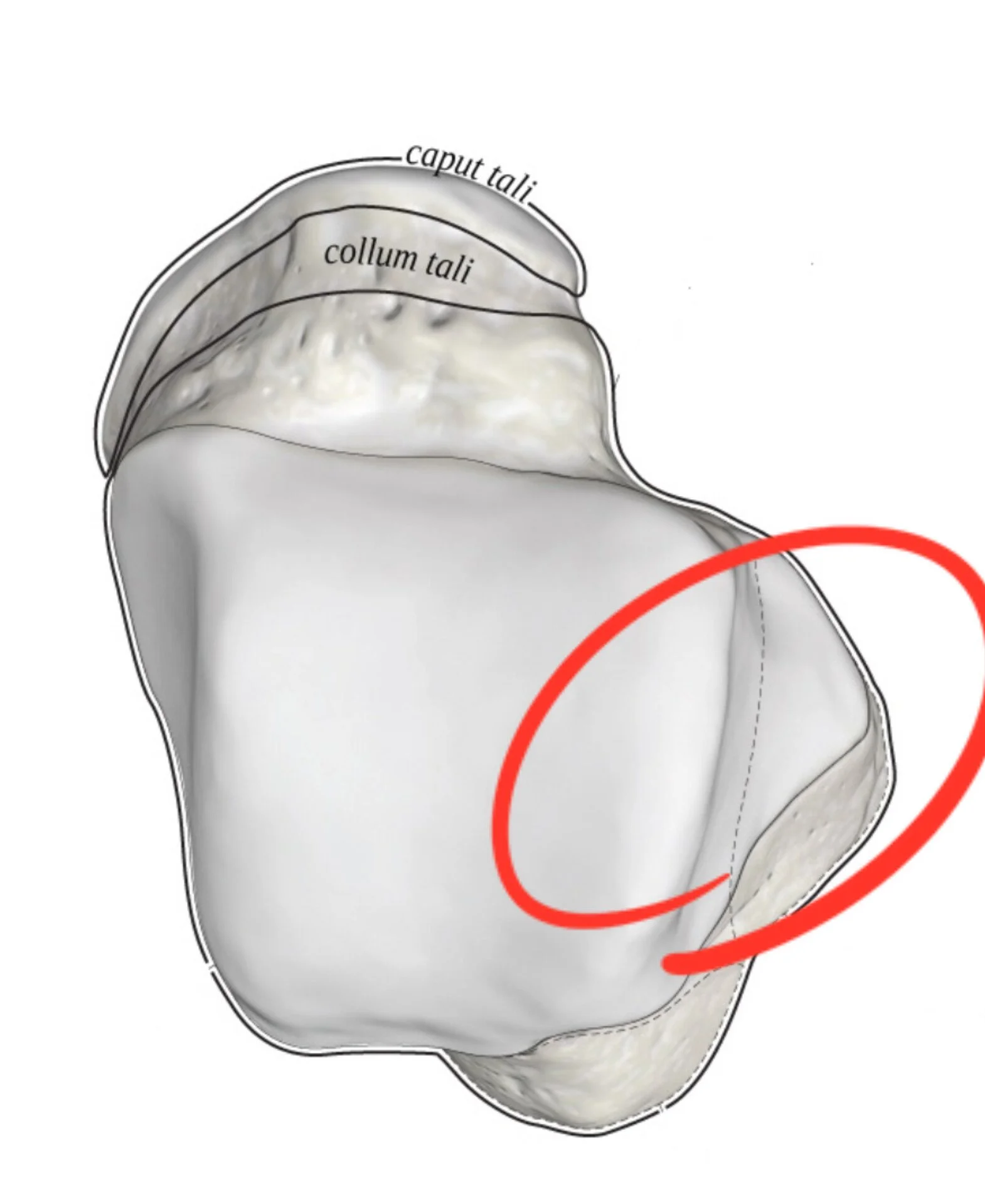
A snowboarder's fracture occurs when this lateral process breaks.
How Does a Snowboarder's Fracture Happen?
Think about the position of your feet when you're snowboarding.
Your feet are secured to the board via your bindings, and your feet and ankles are constantly adjusting as you shift your weight between your toes and heels.
Now imagine you're riding on your heel edge, hit a bump, and land hard.
When your ankle is forced into dorsiflexion (toes pulled toward your face), combined with the outside part of your foot moving outwards and compression through the ankle, the lateral process of the talus can fracture.
Basically the point just below the lateral malleolus slams into that lateral process of the talus and can break that piece of the talus.
The severity of this break can range from a partial fracture (doesn’t go completely through the bone) to a displaced fracture (piece breaks off and moves further away from the main body of the talus)
There is also the possibility of breaking this part of the fibula….but that is for another blog post.
What Does a Snowboarder's Fracture Feel Like?
Here's where things get tricky!
The symptoms can look very similar to a typical ankle sprain.
You may experience:
Pain on the outside of your ankle
Swelling around or below the outside ankle bone
Tenderness just below the lateral malleolus
Pain when pulling your toes toward your face
Difficulty walking or putting weight on that foot
Sound familiar?
That's because these are many of the same symptoms you might experience with a lateral ankle sprain.
But if you have actually sprained an ankle before, this pain is usually a little bit different.
Why Snowboarder's Fractures Are Often Missed
One of the biggest problems with this injury is that it can easily be mistaken for an ankle sprain. Especially in the first 24-48 hours after it occurs.
The pain and swelling occur in a similar area, and even X-rays can miss the fracture because of the overlapping bones.
So someone may be told they have an ankle sprain, go home, and start treating it like one.
But if the lateral process of the talus is fractured, the treatment is very different.
A CT or MRI scan are much better at determining this injury than x-rays.
Why does this matter?
Because a fracture that doesn't heal properly can lead to ongoing pain, joint problems, and potentially arthritis down the road.
In my experience with injuries in general especially when asked if an x-ray is needed, unless it is a medical emergency I usually wait. I know this sounds counterintuitive. Most injuries definitely hurt in the first 24 hours and I mean hurt a LOT. But that pain if NOT a fracture usually starts to calm down 48-72 hours after injury. If pain continues at the same level or increases….then the chances that there is a fracture increases.
So if you hurt your ankle while snowboarding and continue to have significant pain on the outside of your ankle, it's definitely worth getting the initial x-ray and then follow up with a Dr to see if an MRI or CT is warrented.
How Is a Snowboarder's Fracture Treated?
Treatment depends on the fracture, whether the bone fragments have moved, whether the joint surface is involved, how stable the joint is.
Some smaller, stable fractures can heal without surgery.
Most fractures take 6-8 weeks to heal. With time in a boot or cast to make sure the bones stay stable through the healing process as well as being non weight bearing for and initial period as well (usually 2-3 weeks)
More severe fractures may require surgery.
If the broken piece has shifted out of position, screws are used to put the bone back in place and hold it together as the bone heals.
In some cases, smaller fragments that cannot be repaired may be floating in the joint space and need to be removed. These can be particularly irritating to the joint and cause further pain, catching, or locking of the ankle joint.
What About Rehab and Returning to Snowboarding?
Once the fracture is stable enough (approximately 4 weeks) rehab becomes an important part of getting back to your activities.
But, just because the bone has healed doesn't mean your ankle is ready to jump back on to a board!
After spending weeks immobilized and limiting weight-bearing, you'll likely have some stiffness and weakness that needs to be addressed.
Rehab generally progresses through:
Restoring mobility: Getting your ankle moving again, especially dorsiflexion.
Progressive weight-bearing: Getting comfortable loading the foot and ankle again.
Strengthening: Rebuilding strength in the foot, ankle, and lower leg.
Balance and stability: Improving your ability to control the ankle under different loads.
Returning to activity: Gradually building back to the demands of snowboarding.
Depending on the severity of the fracture, recovery can take several months. Some people may return to sport around 3–4 months, while more complicated injuries can take considerably longer.
Great news is that most boarders are usually back ready to ride again the following season.
Dealing with ankle pain after snowboarding or having trouble getting back to the mountain after an injury?
Let's figure out what's holding you back and get you moving in the right direction so you can get back to doing what you love.
What’s Next on Your Reading List
2. Injury Recovery Isn't Just Rest: How to Heal and Get Back to Performance