Knee Pain When Squatting Down or Kneeling: How to Get Rid of It for Good
Knee pain during squatting or kneeling is often blamed on arthritis, but irritation at the front of the knee frequently begins with tightness and protection patterns at the hip. If the TFL and glutes become overactive, they can alter how the kneecap tracks, increasing pressure and sensitivity under the patella.
Over time, this altered tracking can contribute to cartilage irritation and pain with deeper knee bending. Through movement assessment and my LTAP process, I look at what the body is protecting so we can reduce tension first and then build strength in a way the knee tolerates.
By calming the nervous system, improving hip function, and restoring joint control with targeted exercises, many people see meaningful progress within just a few sessions. Addressing the root cause rather than forcing the knee often changes the entire trajectory of recovery.
Read 4 min
Do you get knee pain when you’re squatting down to pick up dog poop?
Or is your knee super sensitive and painful if you kneel down on the floor?
Let’s get into why this happens, and how to get rid of it.
How This Pattern Usually Starts
I see this pattern often.
At first, squatting down is irritating but tolerable.
The front of the knee, usually under the kneecap, feels uncomfortable, but you push through it.
Over time:
Your squat gets shallower
Kneeling becomes painful
You start avoiding getting down to the floor altogether
This is often where people are told, “It’s just arthritis.”
(If you haven’t read it yet, check out my blog “Arthritis: Is It Just Inflammation?”)
What’s Happening at the Knee
What’s usually happening is tightness around the hip, most commonly the glutes and the TFL (tensor fascia latae).
The IT band is actually a long tendon of the TFL. It starts up at the hip and attaches just below the knee joint. There are even fibers from the IT band that connect to the patella (kneecap).
The TFL also shares fibers with the glutes, so when one gets tight, the other often does too. When this happens, they can pull on the kneecap and change how it tracks in its groove as the knee bends.
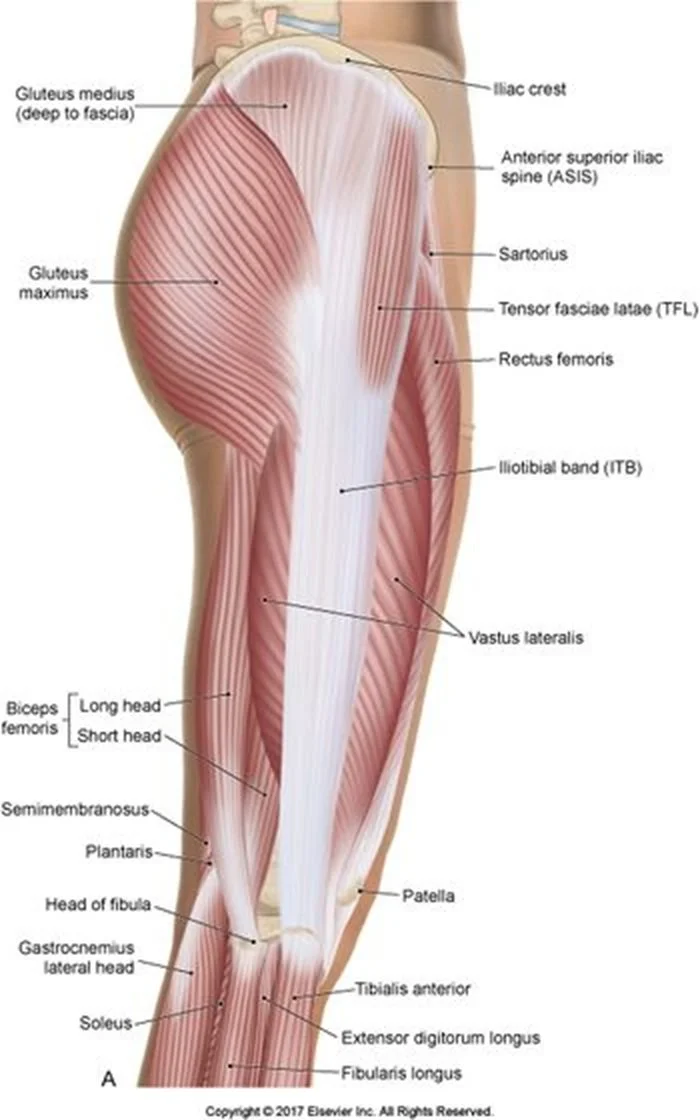
Instead of moving smoothly, the kneecap begins to rub against the femur (thigh bone).
How This Can Lead to Pain With Kneeling and Squatting
If this irritation continues over time, it can wear down the cartilage that covers:
The surface of the femur
The back of the kneecap
Or both
This wearing down of cartilage is what we refer to as arthritis.
As the joint surfaces become more sensitive, even light pressure can cause discomfort. That’s why kneeling can feel very painful, and why deeper squats become something you start to avoid.
The More Important Question: Why Are Those Muscles Tight?
Muscles don’t just get tight for the fun of it. Tthere is always a reason.
Tightness is a form of protection.
So the real question becomes: what are these muscles protecting?
This is where the Hierarchy of Protection comes in.
(You can learn more about this in my blog “Hierarchy of Protection”.)
There are many neurological and visceral connections in the pelvic region that can directly influence the muscles around the hip and knee. For example, the GI system has strong connections to the sacrum. If you’re dealing with digestive issues, that can influence the sacrum,which directly affects the glutes, and ultimately the knee.
Who would have thought an upset stomach could contribute to knee pain?
This is just one example.
Why Assessment Matters
Because of this, addressing protection patterns first is key.
I do this through an assessment called LTAP (developed by Anna Hartman of MovementRev). This allows me to identify what the body is protecting so we can address those patterns first.
Once protection is reduced, the knee can actually respond to treatment.
Where I Usually Start
The first thing I usually start with is self soft tissue work using a THIS ball.
It’s important to use a softer ball here. Something hard, like a lacrosse ball, is often too aggressive and can cause the body to tense up. When the body feels threatened, it won’t allow the tissues to relax, which is what we’re actually trying to achieve.
A softer ball is less threatening to the nervous system and allows the muscles to release more effectively.
There are two main areas I focus on:
TFL
Glutes
Building Strength Without Irritating the Knee
Once the tissues calm down, we can start strengthening the muscles around the hip.
My favorite place to start is with the step-down. This exercise helps you use your glutes more effectively and takes pressure off the knee.
It also allows you to work in a pain-free range of motion, starting small and gradually increasing depth and control.
A Quick Client Story
This reminds me of one of my favorite clients, Jerry.
He came to me with significant knee pain when squatting and using stairs — and he was training for an 8-day hike on the Pacific Coast Trail that was only 8 weeks away.
We started with the movements above and added one final exercise: knee circles.
Your brain has a map of every joint in every position (think Google Maps in satellite view). When you have pain, that map becomes blurry. Gentle joint circles help clarify that map again — often reducing pain.
After one week, Jerry called me in disbelief. He completed a training hike with zero knee pain.
Final Thoughts
I’d love to say everyone improves that quickly, and while that’s not always the case, within 1–3 sessions we are typically moving the needle and making progress.
If you live in the Redondo Beach / South Bay area and knee pain is limiting your ability to squat or kneel, click the button below to schedule your free discovery call.
Let’s talk about what your body might be protecting, and how to help your knees feel safe again.
You can also learn more about me and my process HERE