3 Ankle Strengthening Exercises After an Ankle Sprain
An ankle sprain can heal biologically without fully recovering the strength, stability, and confidence needed for normal movement. This article explains why rehabilitation matters, how the brain plays a key role in recovery, and three exercises that help restore function after an ankle sprain.
It also explores the difference between tissue healing and true recovery, helping readers understand why recurring ankle sprains are so common. A structured rehabilitation program can help restore mobility, strength, balance, and trust in the joint.
5 min Read
Does this sound familiar?
“Why are you limping?”
“Ah I just tweaked my ankle, still a bit sore. Should be good to go in a few days”
“Are you doing rehab?”
“Nah, it will heal in a few days, I’ll be fine”
I can’t tell you how many people I have talked to who have sprained an ankle and never did ANY rehab. It actually blows my mind!
Healing Isn't the Same as Recovery
Will their ankle heal? Yes
The torn ligament fibers will gradually repair themselves over time. But that doesn't necessarily mean they'll heal back to their original strength or tension.
If the ankle is repeatedly stressed too early or isn't properly rehabilitated, the ligaments can heal with increased laxity (slightly stretched out). That leaves the joint less stable than it was before the injury.
On top of that, the muscles around the ankle become weaker, the mechanoreceptors inside the ligament provide less reliable information to the brain, and the nervous system loses some of its confidence in the joint.
Biological healing → collagen repairs the torn fibers. YES
Mechanical healing → Did the ligament regain its normal tension and tensile strength? MAYBE
Neurological recovery → Did the brain restore accurate proprioception, coordination, and confidence? NOT NECESSARILY
Because healing and recovery are not the same.
Why Ankle Sprains Keep Coming Back
In the joint by joint by Mike Boyle and Gray Cook the ankle is a mobile joint.
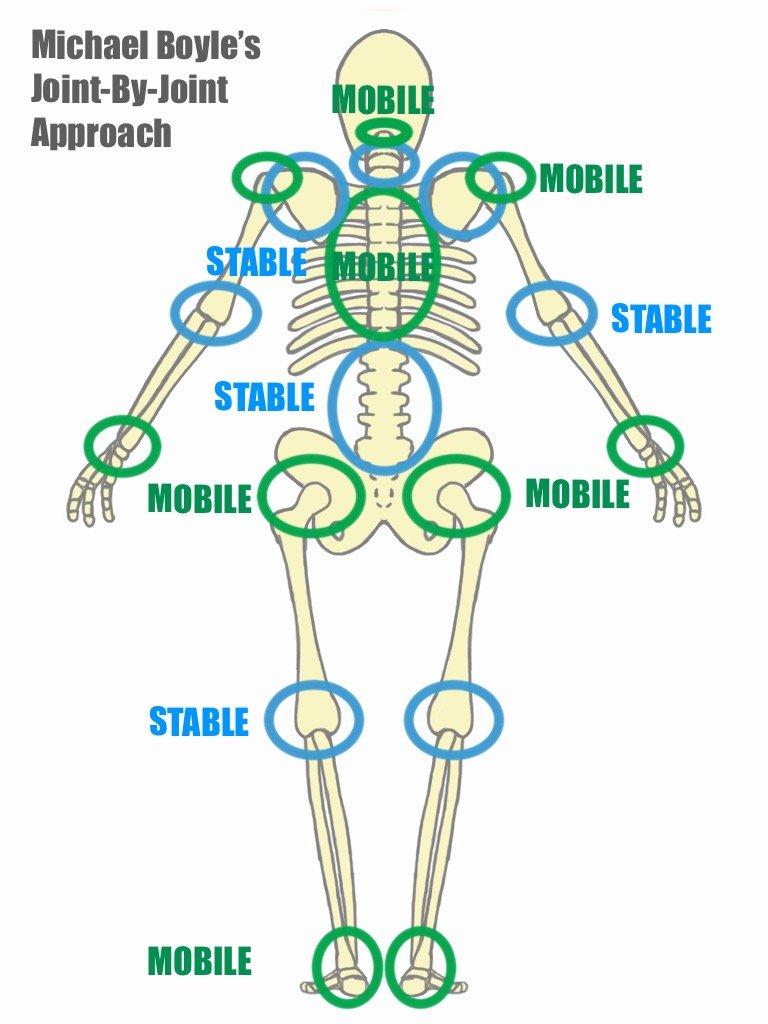
It is kind of a mix of a hinge joint like the knee and a ball and socket joint like the hip. This allows your ankle to move well in multiple directions every time you walk, run, squat, cut, or land from a jump.
When you sprain or twist your ankle, you damage the ligaments that help provide stability to the joint. You then need to strengthen the muscles around the joint in order to provide stability as the ligaments heal. As well as give input to the brain that the joint is safe and can build trust in it again.
The exercises below help do just that.
Many people tell me they have recurring sprain or “bad ankles”. Well first they never did anything to rebuild their strength or trust in it!
If you read my previous article on How to Strengthen Knee Ligaments, you may remember that ligaments aren’t just tissue that hold the bones together. They are filled with tiny sensors called mechanoreceptors that are constantly sending messages to your brain, telling it where the joint is in space as well as other pertinent information. When you sprain your ankle many of those same receptors pathways are disrupted to the brain, which lead to the instability and feeling of uncoordinated, which can last much longer than the actual healing of the tissue.
This is why rehabbing an ankle sprain is so important! Yes you are strengthening the structures around the ankle but more importantly you are rebuilding the pathways to the brain and allow it for feel safe and trust the joint again.
My 3 Go To Ankle Strengthening Exercises
Ankle CARs:
This is basically an ankle circle but at end range. So in the beginning of your rehab journey, this should really just be an ankle circle. Use your Big Toe as your pencil and draw circles in both clockwise and counter clockwise direction.
Once you are out of the initial injury stage you can start doing the CARs (Controlled Articular Rotations) in a PAIN FREE range of motion.
These are very similar to the ankle circles but they now require you to control the range of motion at the end ranges, so it stretches you and your brain's abilities.
Think of your brain as having a map of every joint in every position….this is how it knows where it is in space. When we injure a joint these maps get blurry. Doing Circular movements help clear those maps up, so these aren’t just doing circles to do circles.
Bouncing
Bouncing may look simple, but it's one of my favorite ankle exercises.
It begins by rebuilding calf strength, which is essential after an ankle sprain. The rhythmic calf contractions also help pump excess swelling out of the lower leg.
As you progress, the rhythmic nature of bouncing becomes even more valuable. It forces your visual, vestibular, and proprioceptive systems to work together again, improving coordination, balance, and timing.
In other words, you're not just strengthening your calf, you are rebuilding your body's ability to move confidently…all the things we are looking to do after an injury.
Ankle Tilts
This one may seem a bit counterintuitive. You are basically rolling your ankle to the side almost as you did when you injured it initially. Why would you do this?
Well when you do it in a controlled environment it rebuilds the brain's confidence in the movement. It now feels that it is safe to do this and the next time doesn’t freak out as much!
Start with slow and controlled pain free range of motion. As you continue to heal you can increase the speed as well and range giving the brain a full range to feel safe in.
Don't Skip Your Return-to-Sport Progression
From here you then need to progress to return-to-activity exercises.
Cutting.
Jumping.
Sprinting.
These all need to be trained again before returning to your sport or activity.
The Biggest Mistakes People Make After an Ankle Sprain
Is never starting rehab!
Second most common is doing too much too soon. There is an actually timeline of tissue healing.
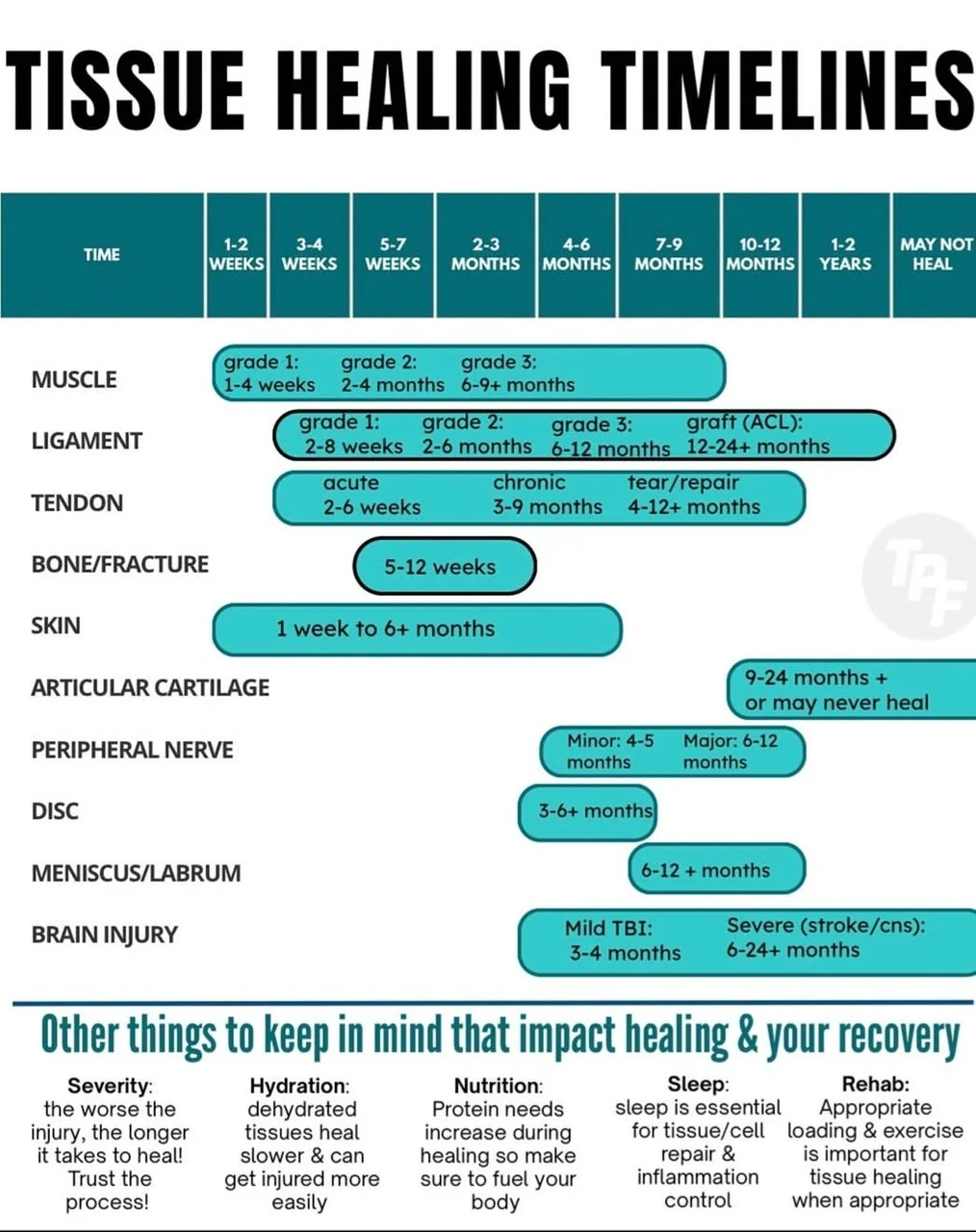
When we stress the joint and not allow the ligaments to rebuild properly they tend to heal in a stretched and unstable length which leads to chronic instability of the joint (even more reason to strengthen the surrounding muscles and such)
The Bottom Line
The goal is not to have an ankle that doesn’t hurt when you walk.
Your goal SHOULD be to have an ankle that your brain trusts!
Need Help Recovering From an Ankle Sprain?
If you've recently sprained your ankle, keep rolling the same ankle over and over, or your ankle still doesn't feel "right" months later, I'd love to help.
At Beth Drayer Movement in Redondo Beach, I don't just treat the injured ligament. I help restore the mobility, strength, balance, and confidence your body needs to trust your ankle again. Learn more HERE
To Schedule your Initial Assessment click below